
What goes into a compelling musical performance? What elements make a tapestry work? I was struck by those connections when I heard Brian Eno interviewed by New York Times reporter Ezra Klein in “Brian Eno on AI, Art and What Makes Us Human.” At one point, Eno talked about music, creativity, and exploration in a way that seemed completely analogous to tapestry weaving.
The first thing I think about when I look at a band is — let’s say, there are five people in that band: How many possible duets is that? How many possible trios? How many possible quartets? How many solos? Five, obviously. And how many with everybody? One.
Instead of a band, let’s look at a tapestry as a band, a combination of elements that make an artistic whole — yarn characteristics, open warp areas, positive/negative space, color, image, borders, size. In this extended quote, the italics are mine.
It very often happens that space has not been explored properly by the band. People haven’t thought: What about if only three of us play in this? And then another, slightly different configuration of three plays.
It’s a very simple thing, but it suddenly unlocks a set of possibilities that probably hadn’t been explored before. What happens if we only have a vocalist, drums and bass — none of the other instruments that usually fill in the harmonic information in between?
There are lots of tricks like that, but there are ways of looking at the system as it stands and thinking: What hasn’t been done yet with this system? What might excite people?
Music grows out of excitement, and if you aren’t feeling excitement, then you try to create it in some way. If the situation isn’t turning you on, then you try to change it until it does turn you on. Because when you are excited, you are at your most alert, I think, and when you are at your most alert, you are most likely to spot the little thing that is going to turn into the big thing.
This is my personal thanks to Frida Hansen, whose work in transparent tapestry made me excited about the technique.
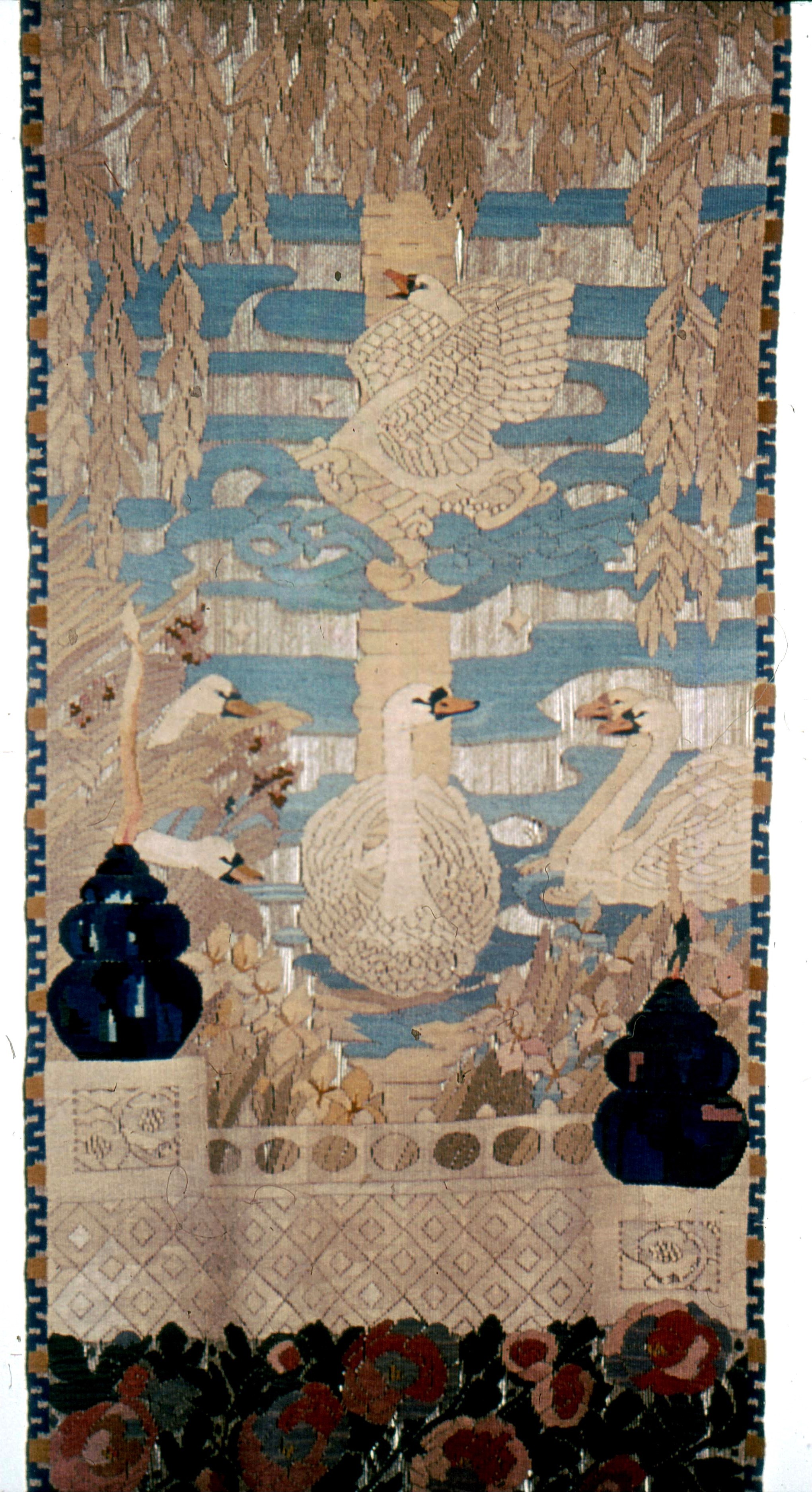
And this is a thank you to all the students who have attended my workshops so far. They are clearly excited about seeing Frida Hansen’s work, and in turn they impart a sense of excitement to fellow students as their exploration begins.

The joy of a workshop is being surrounded by people working with the same ‘band,’ to use Eno’s analogy, and seeing how each translates color, image, and technique into a personal tapestry language. Students come to understand the possibilities of the open-warp technique through hands-on understanding–their hands on their own looms–plus seeing the experimentation of their fellow students.
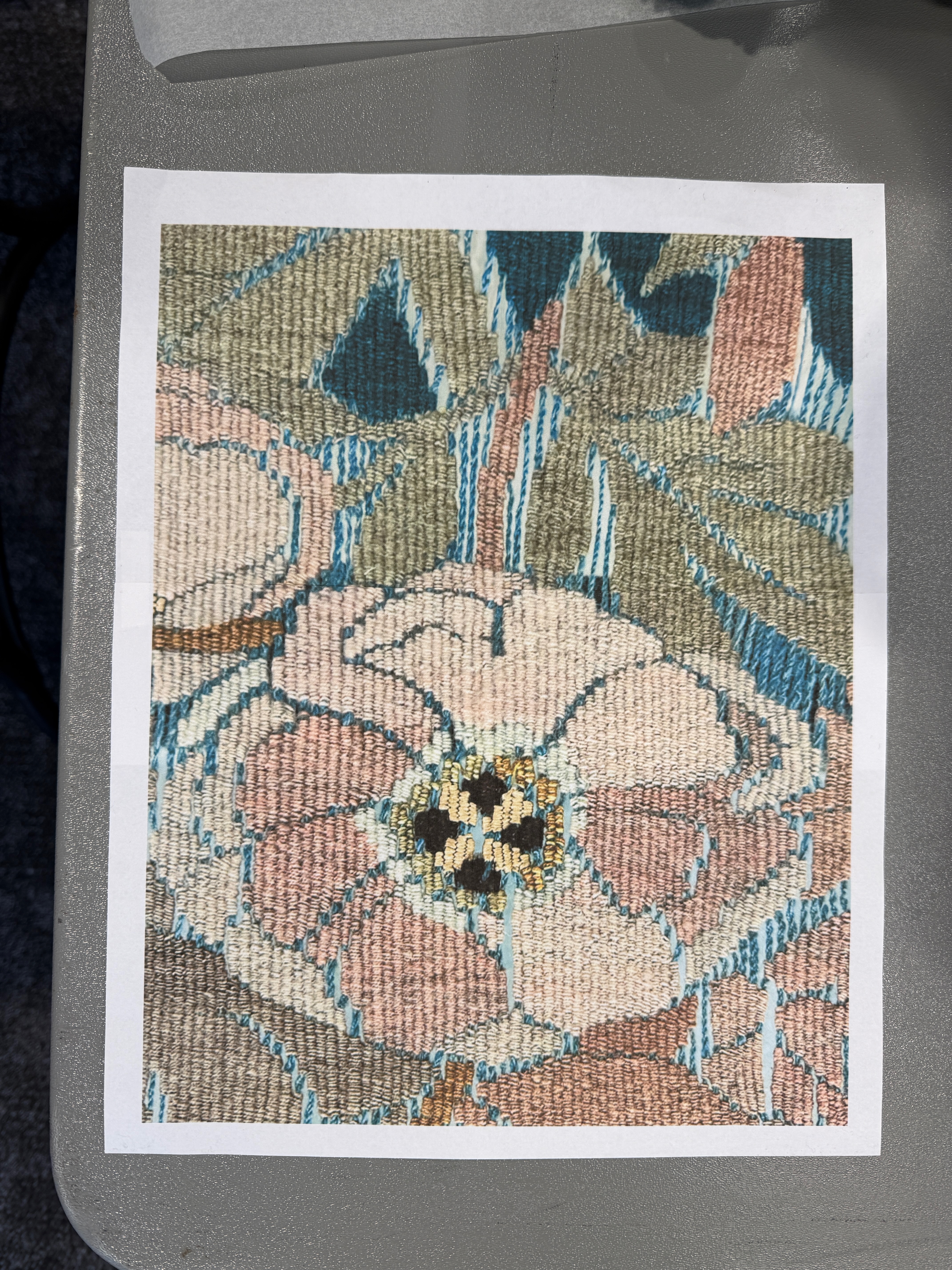
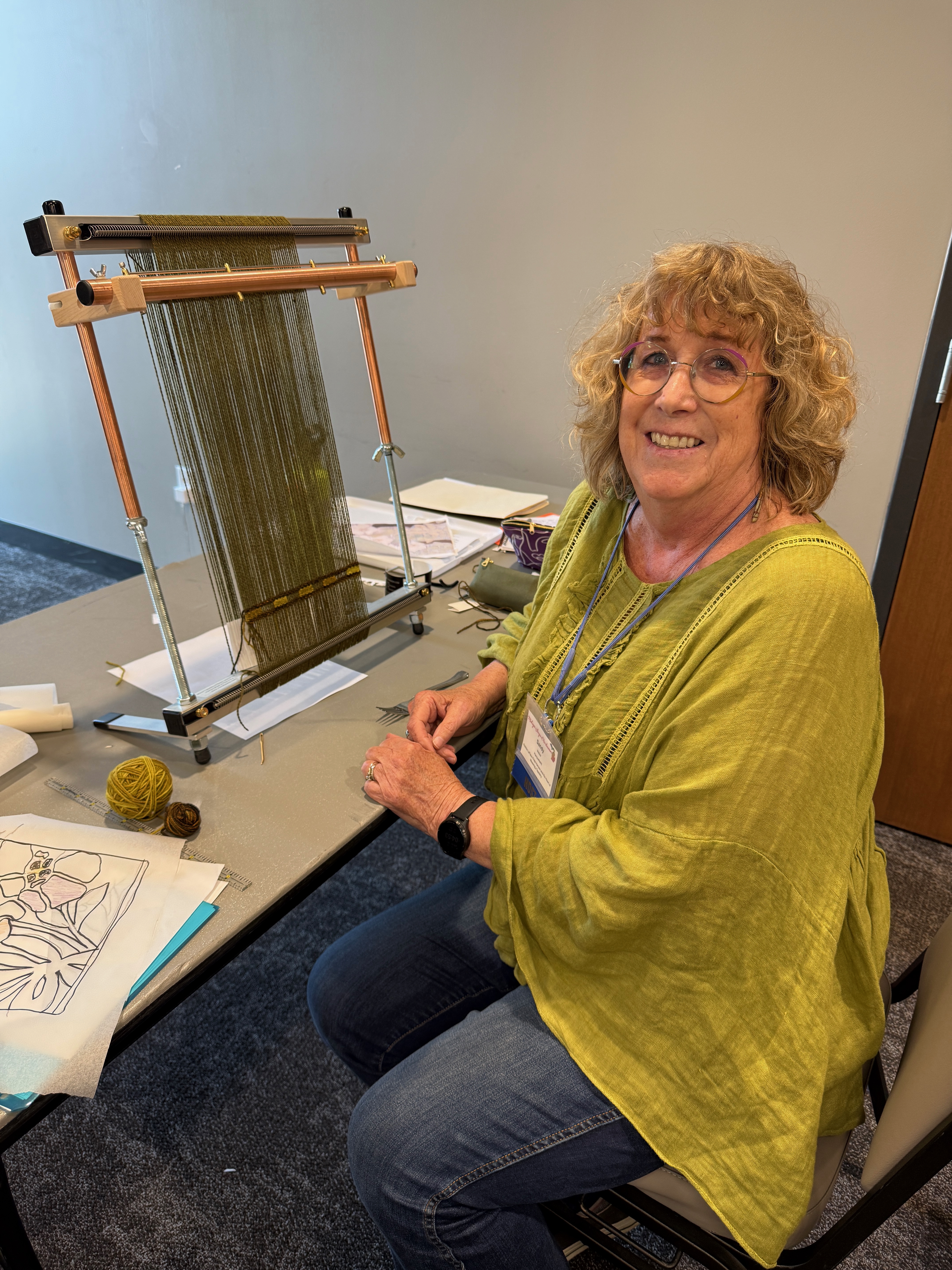
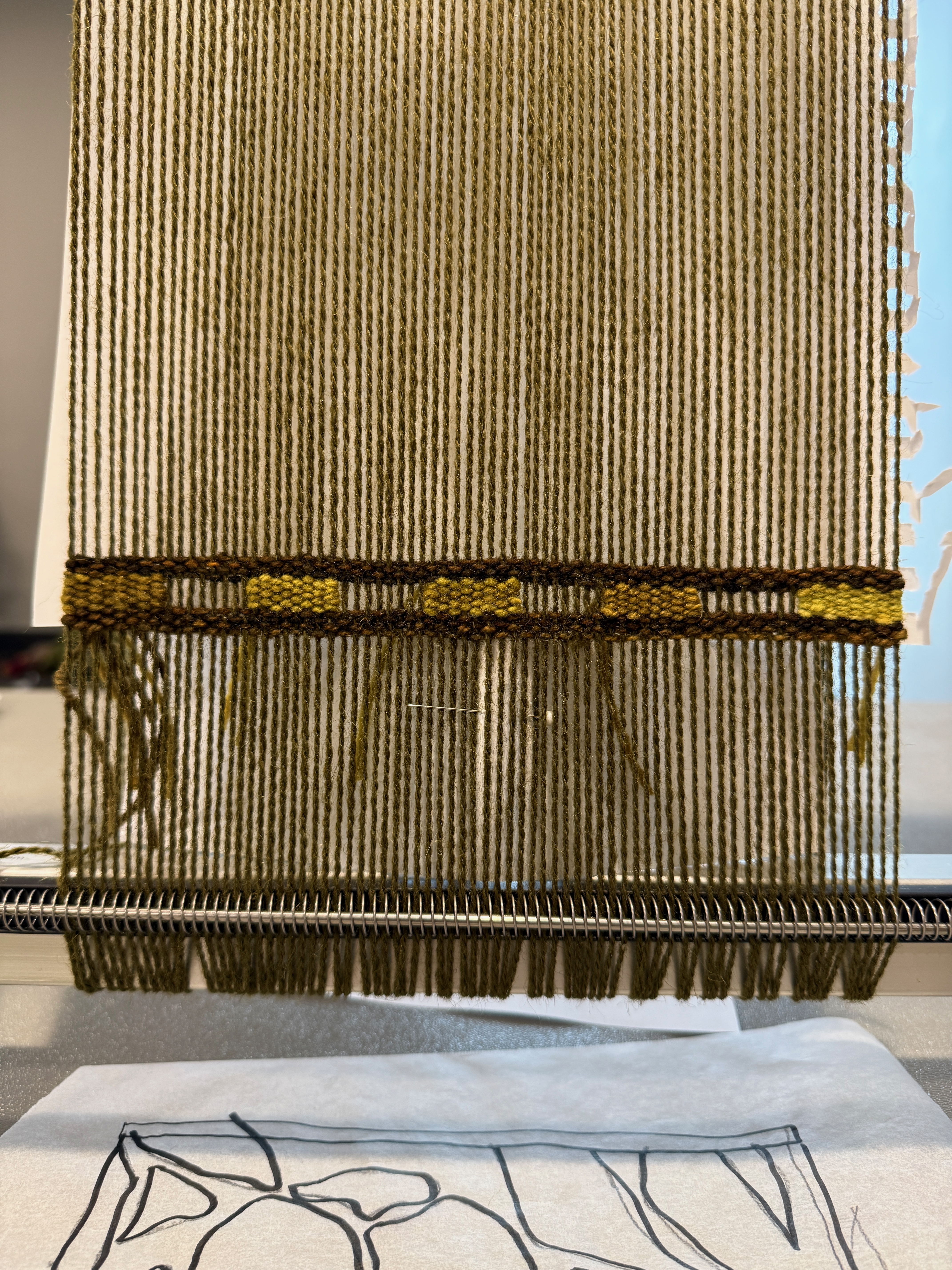
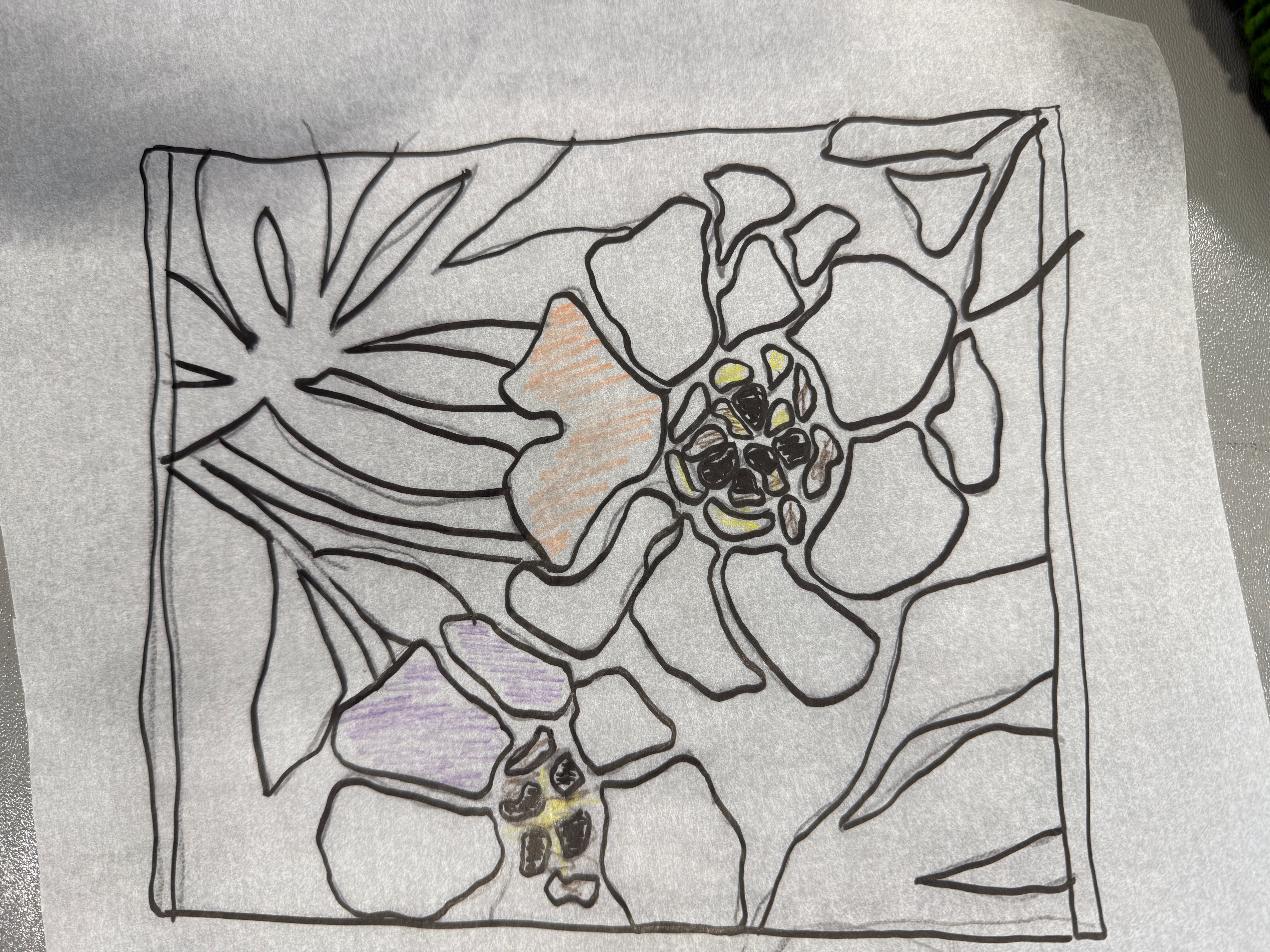
In the Michigan workshop, Sandy Bell began with a Frida Hansen flower from her Juni [June] tapestry, adapted it to her own image, and began weaving, using Ewetopia yarn for weft, and Åklegarn for warp. We wondered about how well the Ewetopia weft would work (too bouncy? too air-filled?), but it covered the warp easily and held perfectly. She was using their “Folk” yarn, and it had variation in color that created lovely nuances in the woven areas. I loved Sandy’s comment about starting on the open-warp weaving, “I’m having such a wonderful weaving experience. No, really!” she emphasized.
While Brian Eno continues his band experiments, I and my fellow open-warp explorers will keep trying new warps, new wefts, and new variations on Frida Hansen’s technique. With every workshop, we find more ways to channel the inspiration of Frida Hansen’s wonderful work.