I wrote a month ago about my participation in Living Lineage: Linen in Scandinavian Folk Art and Modern Innovation. I was honored to be chosen as one of six artists to create works in linen for an exhibition in December. My goal is to use Frida Hansen’s open-warp technique, but with linen warp rather than wool. Before I go big, I needed to weave samples with different weights and types of linen warp. You can read about those experiments in my earlier post, “Four-Petaled Flax and Other Experiments.”
This project has a lot of energy and camaraderie. Natalie Sheckey, one of the artists in the project, is hosting a get-together next week, timed to allow us to admire her blooming plot of flax and get to know one another.
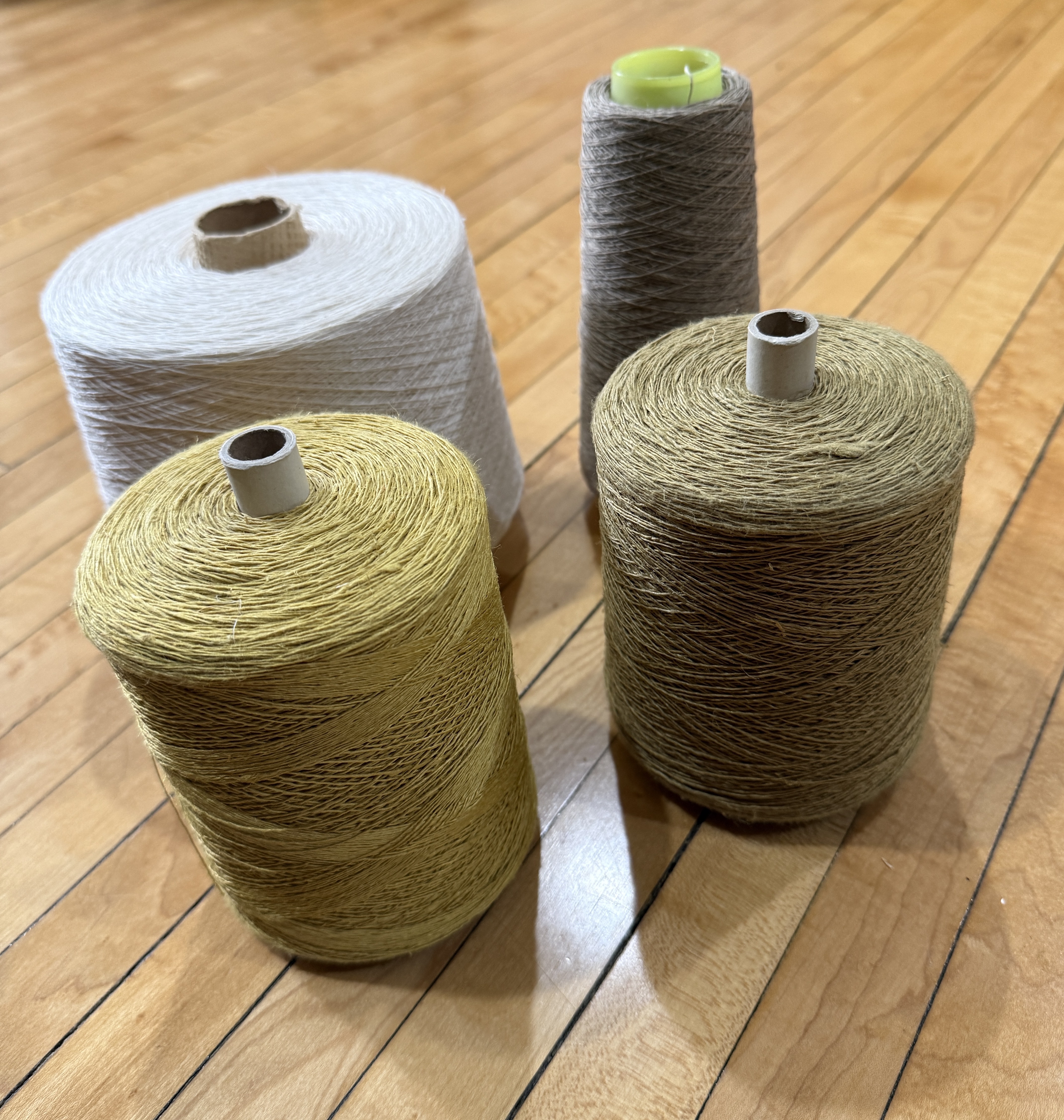
My own project has an “it takes a village” feel. My friend Wendy Johnson is plying thin strands of linen to test as a warp. Betsy Konop from the Weavers Guild of Minnesota snagged some rough tow linen from a box of yarn donations to the Guild, and set it aside for possible experimentation. That was my sample #4.
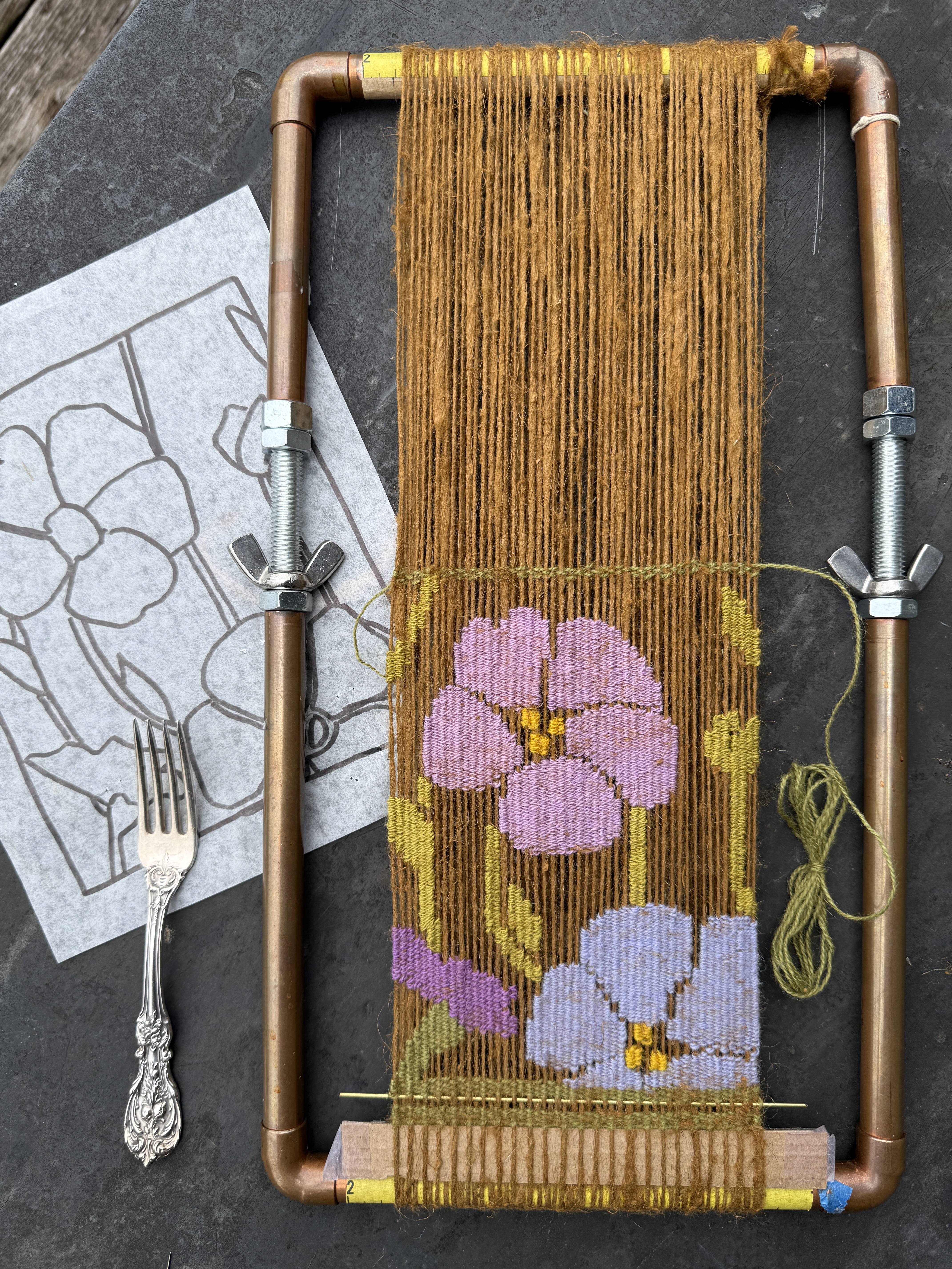
I was testing yarn in my stash for possible flax-flower colors. None were perfect.
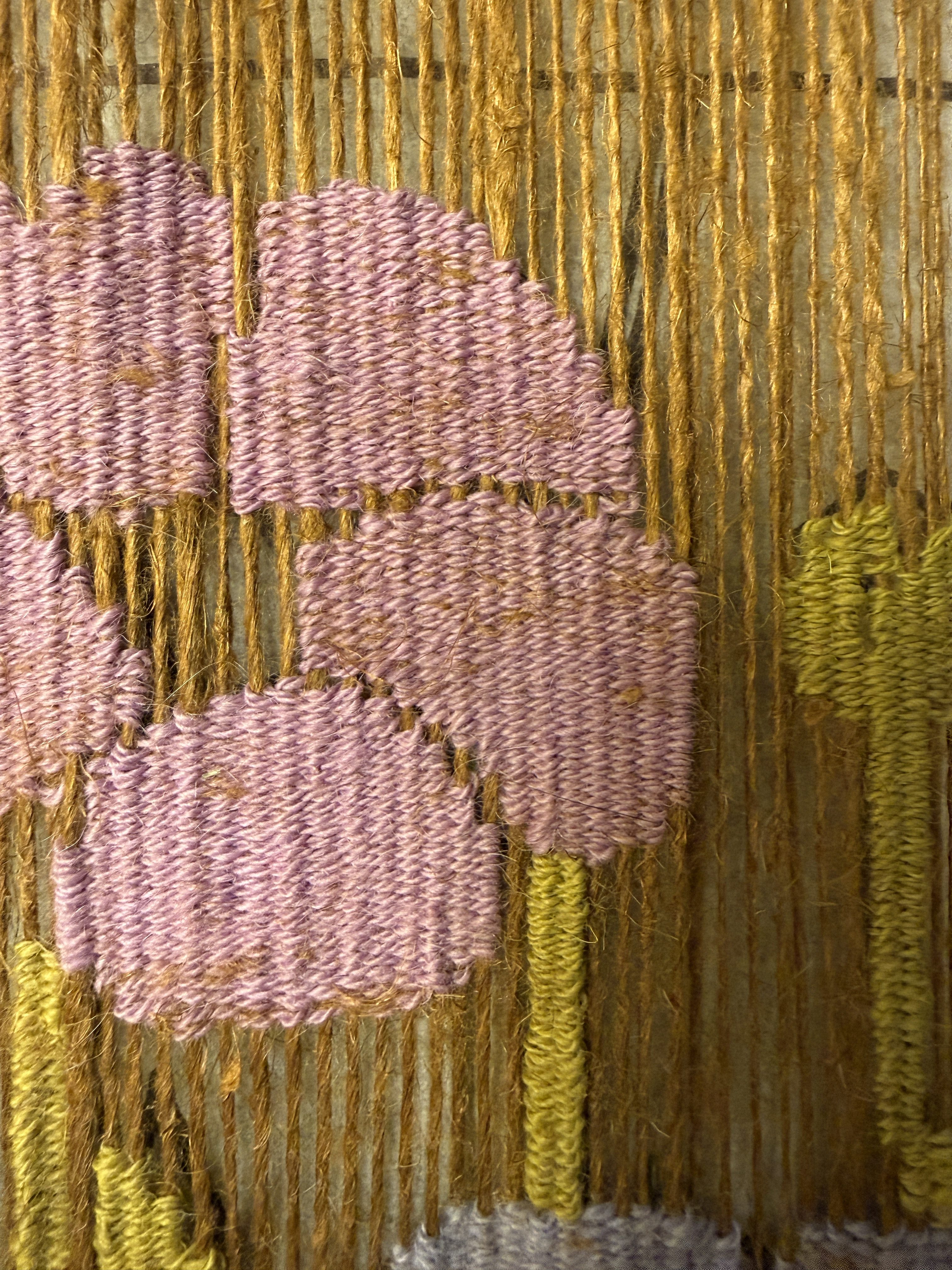
There is so much stickiness to the yarn that all of the weft stayed in place, no problem. Two problems surfaced. One was that when the sheds were pulled apart repeatedly, the warps fuzzed up and were difficult to separate. Can you see that in the photo below, left? Also, fuzzy bits gathered between the weft shots, giving the woven parts an unattractive haze.

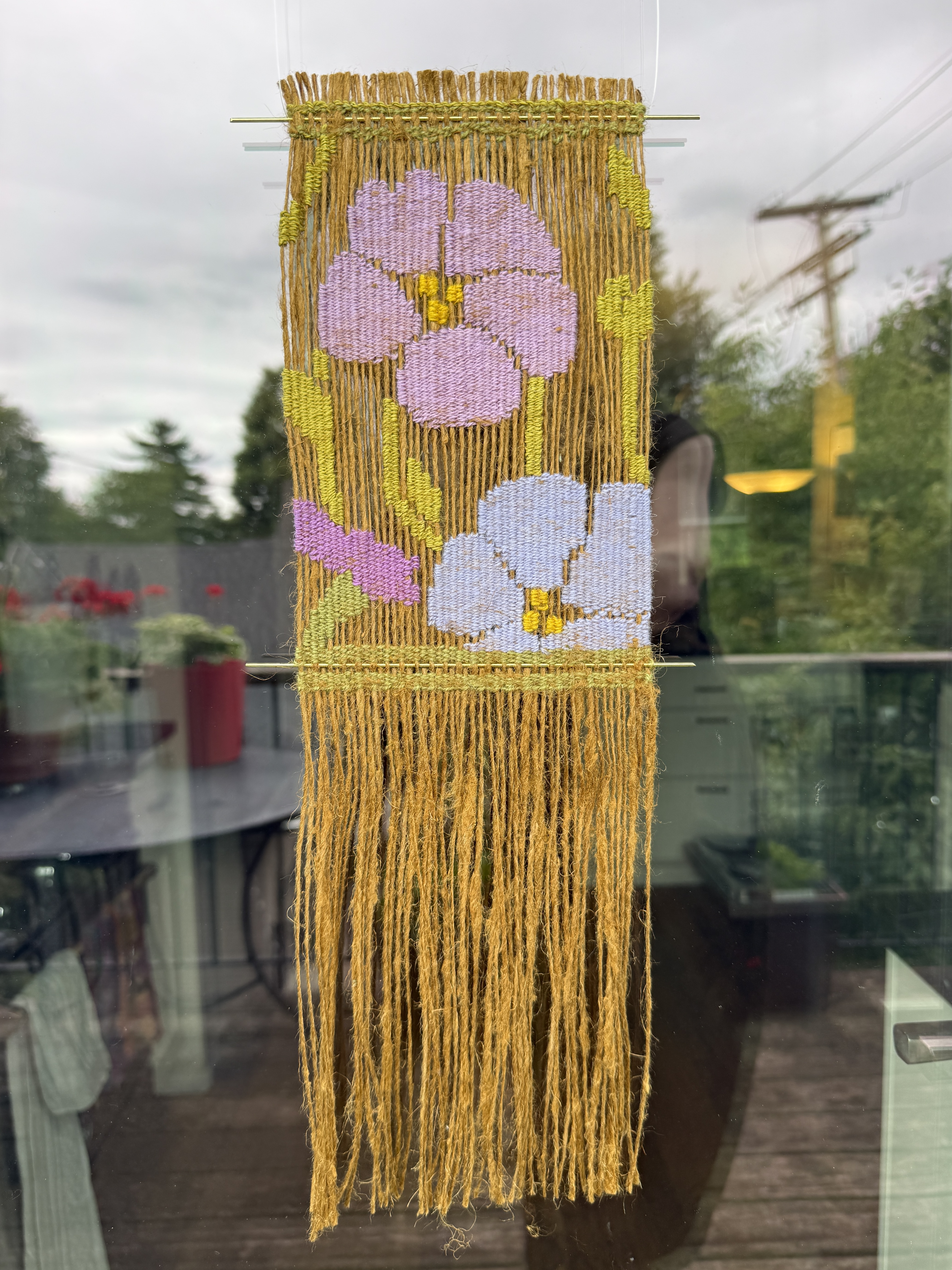
Of the four sample pieces, this one was by far the stiffest. At first I disliked that result, but as I picked up the piece now and then, I decided it wasn’t bad. If a much larger piece had a bit of stiffness, but also a transparent effect through the open warp, that wouldn’t be a bad combination.

I am looking forward to the next test, with plied thin tow linen yarns for warp. If I’m lucky, the color will be beautiful, it will hold the weft in place nicely, and not be so rough that the fuzzy slubs cast a haze on the woven sections.